






The rise of generative AI, real-time face swap tools, synthetic identity fraud, and large-scale biometric spoofing has fundamentally changed the threat landscape. Fraudsters are no longer limited to static photos or replayed videos. Today, they deploy deepfake injection attacks, virtual camera manipulation, and AI-generated 3D facial models to bypass weak identity verification systems.
At the same time, regulators, including the RBI and SEBI in India, are tightening expectations around remote onboarding, biometric integrity, and fraud prevention controls.
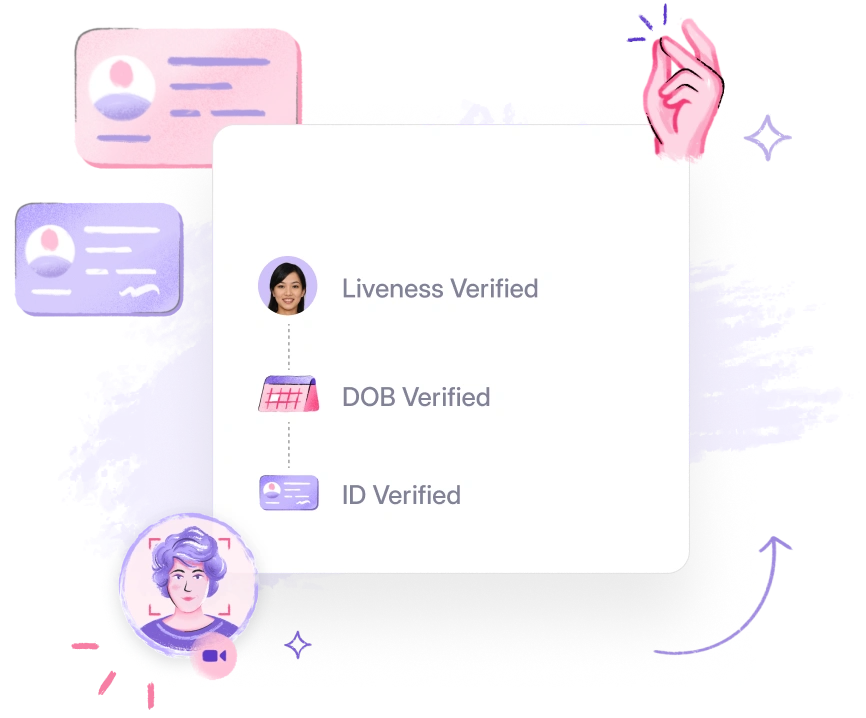
This is where passive liveness detection plays a decisive role.
Unlike older challenge-response systems, passive liveness works silently in the background, using advanced AI models to detect whether a biometric sample comes from a real, physically present human without requiring the user to blink, smile, or perform unnatural movements.
In this guide, we go beyond definitions. We break down how passive liveness detection works, how it is evaluated, how it defends against deepfakes, and what enterprises should look for when deploying it in 2026.
Understanding liveness detection
In simple terms, liveness detection technology can be thought of as a digital gatekeeper verifying that the person interacting with a system is genuinely present in real time, and is who they claim to be. It’s essential for ensuring that someone isn’t trying to use a static image, video, or other methods to fake their identity.
- The importance of liveness detection in identity verification
Liveness detection is critical for identity verification, especially if you’re dealing with sensitive data or financial transactions. Think of identity verification as checking someone’s ID, while liveness detection makes sure the ID holder isn’t a cardboard cutout. Together, they create a double-protection barrier against fraudsters who may try to slip through with stolen or fake identities.

Now, imagine a cryptocurrency app that requires users to verify their identity before they can access their account. Without liveness detection, a fraudster could potentially use a stolen photo to fool the system. But with liveness detection technology in place, the system can detect that the user is real and alive, adding an extra layer of security.
The Rise of Presentation and Injection Attacks in the AI Era
Modern biometric fraud falls into two primary categories defined under ISO standards:
1. Presentation Attacks (Physical Spoofing)
These occur when an attacker presents a fake biometric artifact to the camera. Common examples include:
- Printed photos
- High-resolution screen replays
- 3D silicone masks
- Video replay attacks
Traditional liveness detection was designed primarily to stop these attacks.
2. Injection Attacks (Digital Manipulation)
Injection attacks are more sophisticated. Instead of presenting something physically to the camera, attackers inject manipulated data directly into the application layer.
Examples include:
- Virtual camera deepfake feeds
- Real-time face swap software
- Pre-recorded video injection into SDK streams
- Emulator-based manipulation
Injection attacks are growing rapidly in 2025–2026 because generative AI tools have become commercially accessible.
Passive liveness detection systems must now defend against both presentation and injection attacks — not just photo spoofing.
Active vs. passive liveness detection
When it comes to liveness detection, there are two main types–active and passive. Let’s dive into what makes them different.
- Active liveness detection: a brief overview
Active liveness detection is like a quick security check system that ensures you’re not just a photograph or a recorded video. It can ask you to do something simple–like blink, smile, scan your finger, or turn your head, in other words–user-initiated actions. These interactions help the system confirm that you’re actually there, alive, and not a fake.
Now, active liveness detection, while useful, isn’t without its flaws. One of the biggest issues with this system is spoofing, where fraudsters use tricks like photos, videos, or even 3D masks to fool the system. Further, the requirement for users to perform actions can feel invasive and awkward, especially in public settings.
In other words, active liveness detection though effective, is not perfect. In reality, it can sometimes create more frustration than security for genuine users.
Passive liveness detection: a deeper dive
At its core, passive liveness detection is designed to verify the identity of a user without any input from the user. This ‘point and shoot’ simplicity is a massive improvement over older methods that often frustrated users, leading to abandoned sign-up processes and a poor overall experience.
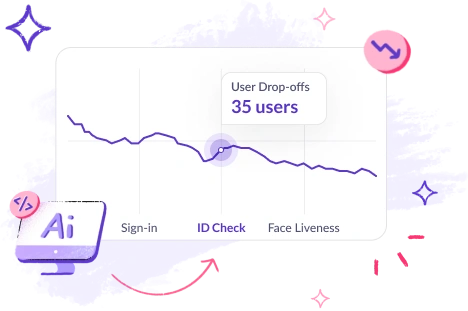
By working silently in the background, passive liveness detection makes it much harder for fraudsters to figure out how to bypass the system.
Let’s read in more detail what this system is.
- Defining passive liveness detection
Passive liveness detection is a sophisticated form of biometric security that verifies whether a face presented to a recognition system is live, without requiring any action from the user.
Unlike active liveness detection, which prompts users to perform specific tasks, passive liveness detection operates entirely in the background. It utilizes advanced AI algorithms to analyze various biometric cues from the image, such as skin texture, facial contours, and light reflections to distinguish between a real person and a spoof attempt using photos, videos, or masks.
This technology is designed to be invisible to the user, providing a seamless experience while significantly enhancing security. Win-win!
- How passive liveness detection works
The underlying technology powering passive liveness detection is a combination of advanced computer vision, machine learning, and deep learning algorithms. Typically, when a user initiates a facial recognition process, the system captures a selfie or a short video, which is then subjected to a meticulous analysis.
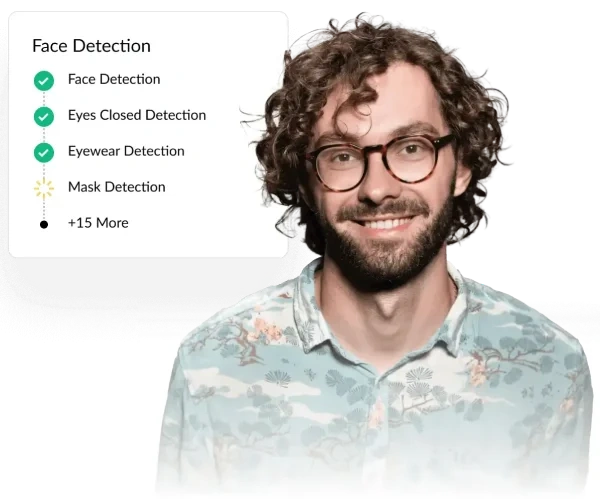
The system then scrutinizes minute details, such as variations in skin tone, depth perception, and light reflections, to identify any discrepancies that may indicate the presence of a spoof attempt.
Advanced algorithms are trained to recognize the subtle nuances that distinguish a live human face from a static image, a video, or a 3D mask.
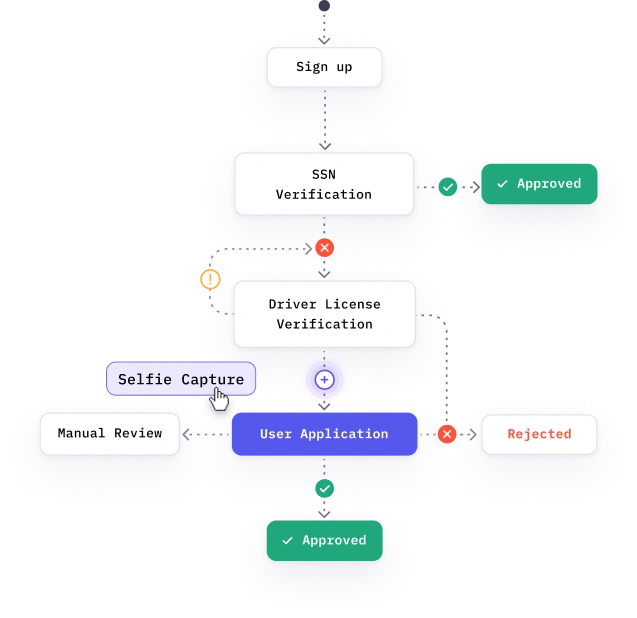
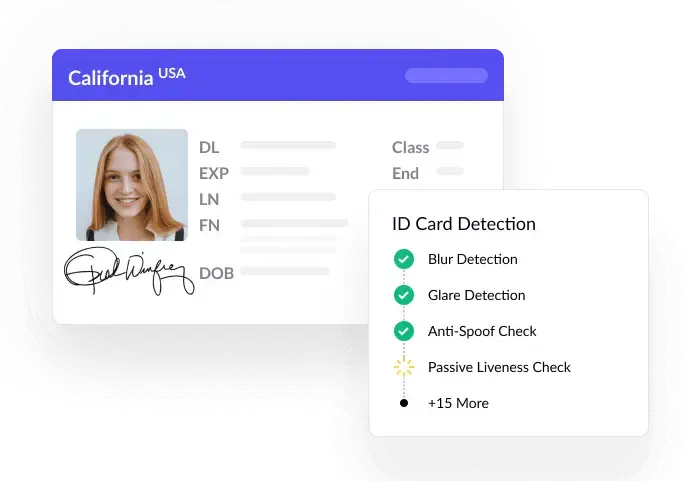
Next, the system cross-references the captured biometric data with the user’s identification document, such as a driver’s license or a passport, to ensure a perfect match. This additional layer of verification helps eliminate the risk of impersonation, where fraudsters might attempt to use a genuine ID to bypass the security measures.
The entire process is completed in real time, and the results are delivered almost instantly. This quick turnaround not only improves the user experience but also ensures that the system remains robust against fraudulent attempts.
How Passive Liveness Detection Is Evaluated (FAR, FRR & PAD Metrics)
Enterprise-grade liveness detection cannot be assessed using vague “accuracy” claims. It is measured using standardized biometric performance metrics.
False Acceptance Rate (FAR)
FAR measures how often the system incorrectly accepts a spoof attempt as genuine.
Lower FAR = stronger fraud resistance.
False Rejection Rate (FRR)
FRR measures how often legitimate users are incorrectly rejected.
Lower FRR = better customer experience.
APCER & BPCER (ISO 30107-3)
Under ISO/IEC 30107-3 testing:
- APCER (Attack Presentation Classification Error Rate) measures how often spoof attacks bypass detection.
- BPCER (Bona Fide Presentation Classification Error Rate) measures how often genuine users are incorrectly flagged.
Threshold Calibration
Every liveness model operates on a score threshold.
Setting it too strict increases customer drop-offs (higher FRR).
Setting it too lenient increases fraud exposure (higher FAR).
In high-risk BFSI use cases, threshold calibration must be aligned with:
- Fraud risk appetite
- Regulatory obligations
- Channel type (self-serve vs assisted Video KYC)
- Transaction value
This is why enterprises should always ask vendors for test reports, dataset transparency, and threshold guidance, not just “accuracy percentages.”
Advantages of passive liveness detection
- Enhanced user experience
Passive liveness detection operates discreetly in the background, providing a seamless and frictionless authentication process, which can lead to reduced abandonment rates and a more enjoyable customer onboarding experience.
- Improved security
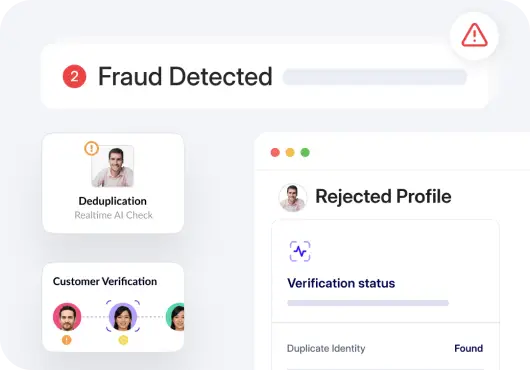
Advanced algorithms that analyze intricate facial features, and micro-expressions, can effectively distinguish between live human faces and spoofing attempts, safeguarding against identity fraud and unauthorized access.
- Cost-effective implementation
Passive liveness detection eliminates the need for specialized hardware or additional user devices, making it a more cost-effective solution compared to traditional liveness detection methods
- Continuous monitoring
Passive liveness detection can continuously monitor user interactions, providing an additional layer of security by detecting potential threats or suspicious activities in real-time.
- Compliance and regulatory alignment
Passive liveness detection can help organizations meet stringent security and privacy regulations, such as those related to biometric data protection, ensuring compliance and building trust with customers and stakeholders.
Elevate your fraud protection with industry-leading solutions.
From passive liveness detection to comprehensive risk analysis, HyperVerge has got you covered. Book a demo now.How to Evaluate a Passive Liveness Detection Vendor in 2026
Before deploying passive liveness detection, enterprises should assess:
Security & Certification
- ISO/IEC 30107-3 Level 2 or above certification
- Independent third-party test reports
- Injection attack resistance
Performance
- Documented FAR and FRR metrics
- Threshold flexibility
- Latency benchmarks
Deployment Architecture
- On-device vs server-side processing
- SDK + API support
- Edge optimization for low bandwidth
Fraud Ecosystem Integration
- Compatibility with risk engines
- Behavioral biometrics support
- AML orchestration readiness
Regulatory Readiness
- RBI Video KYC alignment
- Data protection compliance (DPDP, GDPR)
- Secure biometric storage policies
Real-world applications of passive liveness detection
Passive liveness detection has found widespread applications across various sectors, each leveraging its unique capabilities to enhance security and user experience.
Financial Services
- Secure onboarding: Passive liveness detection can be seamlessly integrated into mobile banking and financial services apps to ensure secure onboarding of new customers without compromising the user experience.
- Fraud monitoring: By continuously monitoring user interactions, passive liveness detection can detect and flag suspicious activities in real time.
- Regulatory compliance: Passive liveness detection aligns with strict financial regulations, such as Anti-Money Laundering (AML) and Know Your Customer (KYC) requirements, allowing financial institutions to demonstrate their commitment to data privacy and security.
Government and Border Control
- Secure border crossings: Passive liveness detection can be integrated into border control systems, seamlessly verifying the identity of travelers without the need for intrusive physical checks.
- Identity verification for government services: Governments can leverage passive liveness detection to securely verify the identity of citizens accessing online portals and digital services. It can also help government agencies detect and prevent fraudulent claims or misuse of social welfare programs.
Other Industries.
- Enhanced user authentication for digital platforms: Online platforms, such as e-commerce, gaming, or content streaming services, can utilize passive liveness detection to strengthen their user authentication processes.
- Telehealth and medicine: Passive liveness detection can play a crucial role in the healthcare sector, ensuring secure patient identification and enabling remote consultations while maintaining privacy and data protection.
Passive Liveness Detection & RBI-Compliant Digital Onboarding in India
India presents unique remote onboarding challenges:
- Low-bandwidth rural networks
- Assisted Video KYC models
- Vernacular onboarding flows
- High volume fintech ecosystems
The Reserve Bank of India (RBI) mandates strict controls for Video KYC and remote customer onboarding. Financial institutions must demonstrate that:
- The individual is physically present
- The biometric capture is genuine
- The process is tamper-resistant
Passive liveness detection strengthens compliance by:
- Reducing impersonation risk
- Enhancing Video KYC integrity
- Lowering assisted verification fraud
- Supporting AML and KYC audit trails
As fraud sophistication increases, regulators are expected to tighten expectations around biometric integrity and anti-deepfake controls in remote onboarding journeys.
For Indian BFSI institutions, passive liveness detection is a scalable risk mitigation requirement.
Can Passive Liveness Detection Stop Deepfakes?
Deepfakes represent the most serious evolution in biometric fraud.
Unlike traditional spoofing methods, deepfakes use generative adversarial networks (GANs) and real-time face swap engines to create synthetic but highly realistic facial movements.
Modern deepfake threats include:
- Real-time identity impersonation during video onboarding
- Synthetic facial overlays injected into camera streams
- AI-generated faces that do not correspond to any real individual
Advanced passive liveness detection systems defend against deepfakes by analyzing:
- Skin micro-texture inconsistencies
- Light reflection anomalies
- Depth and 3D contour irregularities
- Temporal inconsistencies across frames
- Device and environmental signal mismatches
However, liveness alone is not sufficient.
In 2026, leading institutions combine passive liveness with:
- Device fingerprinting
- Behavioral biometrics
- Risk-based authentication engines
- AML monitoring
The goal is not just detection — it is layered fraud orchestration.
The future of passive liveness detection
- Advancements in technology
Leveraging the rapid progress in areas such as computer vision, deep learning, and edge computing, the next generation of passive liveness solutions will be able to achieve even higher levels of accuracy, speed, and versatility. The integration of emerging technologies, like 5G and the Internet of Things (IoT), will open up new avenues for implementation across a wide range of industries, from smart cities and connected vehicles to healthcare and beyond.
- Overcoming challenges
One key focus will be on overcoming the challenges posed by increasingly sophisticated spoofing techniques. Researchers are exploring innovative approaches, such as the integration of thermal imaging or multi-modal sensing, to reliably distinguish between live faces and advanced digital or physical forgeries. As the demand for effortless digital experiences grows, passive liveness detection will have a prominent place in the realm of biometric authentication and identity management.
Conclusion
In high-risk digital onboarding environments, passive liveness detection has become the preferred baseline control, particularly where customer experience and fraud resistance must coexist without friction.
If you’re looking to unlock the power of passive liveness detection explore HyperVerge’s industry-leading technology. By achieving the coveted ISO 30107-1/30107-3 Level 2 compliance certification with zero percent FAR and zero percent FRR, HyperVerge has positioned itself as a leader in the field of biometric security.
Book a free demo now!