






The first time I watched a credit team review a bank statement, three analysts spent eleven minutes on a single applicant, re-typing salary credits into a spreadsheet, eyeballing for bounced EMIs, arguing about whether a ₹40,000 round-number transfer was income or a friendly loan.
Multiply that by a few thousand applications a month, and you understand why turnaround time, not credit risk, is what actually kills most lending funnels.
A good bank statement analysis software exists to delete those eleven minutes. But “bank statement analysis platforms” is one of the most confusing categories you can shop for, because the search results bundle together two completely different kinds of product: cheap PDF-to-spreadsheet converters built for accountants, and underwriting-grade platforms built for lenders. Buy the wrong one and you either get clean CSVs with no risk signal, or an enterprise contract for a job a $39 tool could do.
This guide is for the second group: banks, NBFCs, fintechs, and digital lenders who need the analysis to drive a credit or fraud decision, not just tidy the bookkeeping.
What bank statement analysis software actually does (the 60-second version)
Bank statement analysis software ingests a customer’s bank statements, as PDFs, scans, e-statements, or Account Aggregator feeds, and converts them into structured, decision-ready financial signals.
These signals include verified income, average balances, cash-flow trends, EMI obligations, bounce history, and fraud flags. For lenders, the output isn’t a spreadsheet. It’s an underwriting input: a defensible view of whether this applicant can and will repay, produced in seconds instead of minutes.
That distinction, document tidying versus risk decisioning, is the single most important thing to get right before you compare vendors. Everything below is organised around it.
The two categories that Google keeps mixing up
If you only remember one thing from this article, remember this split:
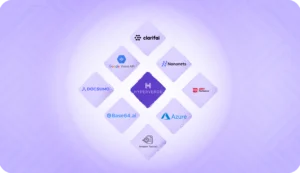
- Conversion / extraction tools (DocuClipper, MoneyThumb, ProperSoft, Nanonets). They take a PDF and give you Excel, CSV, QBO, or QFX. Brilliant for accountants and bookkeepers. They do not score income, detect underwriting fraud, or plug into a loan-origination system.
- Lending / underwriting platforms (HyperVerge, Ocrolus, Perfios, plus bank-link APIs like Plaid). They extract and analyse — income verification, cash-flow scoring, anomaly and fraud detection, and integration into the credit workflow.
Most teams I talk to start by shopping in the first category because it’s cheaper, then discover six weeks later that they’ve solved data entry and not underwriting. If a credit or risk decision sits downstream of this tool, you want the second category. To understand the mechanics beneath both, our explainer on how bank statement analysis works breaks down the extraction-to-insight pipeline step by step.
How to choose: the 6 criteria that actually predict success
After enough lending integrations, the demos blur together, and the same six questions end up separating the tools that survive production from the ones that don’t:
- Ingestion breadth. Can it read scanned and camera-clicked PDFs, password-protected statements, e-statements, and Account Aggregator JSON — not just clean digital PDFs? Real applicants upload blurry photos. A tool that only handles pristine PDFs fails on the segment you most need to approve.
- Extraction accuracy on messy inputs. Vendors quote 99% accuracy on clean statements. Ask for accuracy on scanned, multi-bank, regional-language statements. That number is the real one. (The OCR layer is doing the heavy lifting here — see OCR for banking.)
- Risk signals, not just data. Does it return income classification, average monthly balance, EMI-to-income, bounced-payment count, and circular-transaction flags? Or does it hand you raw rows and leave the analysis to you?
- Fraud detection. Tampered statements are now a standard attack. The tool should flag edited PDFs, font inconsistencies, recomputed balances, and statements that don’t reconcile.
- Workflow fit. API-first with sub-minute response, webhooks, and a clean way into your LOS/decisioning engine. A beautiful dashboard nobody can integrate is shelfware.
- Compliance and data handling. Consent-based access, audit logs, data residency, and — in India — Account Aggregator alignment and RBI-friendly handling.
Score every vendor on those six before you look at price. Price is easy to compare; production reliability is not.
The 5 best bank statement analysis software for lending in 2026
| Tool | Best for | Inputs | Risk / fraud signals | Buyer fit |
|---|---|---|---|---|
| HyperVerge | Lending + onboarding in one stack | PDF, scan, e-statement, Account Aggregator | Income, cash-flow, EMI, tampering & anomaly flags | Banks, NBFCs, fintechs, lenders (India + global) |
| Ocrolus | US small-business & consumer lending | PDF, scan | Income, cash-flow analytics, fraud detection | US lenders, LOS-integrated workflows |
| Perfios | Large-scale Indian BSA & underwriting | PDF, e-statement, Account Aggregator | Deep financial analytics, fraud checks | Indian banks & NBFCs, high volume |
| Plaid | Connected-account data (no PDFs) | Bank API connections | Transaction data, balances (less PDF/fraud) | US/EU fintechs with linked-account flows |
| DocuClipper | Budget PDF-to-spreadsheet conversion | PDF, scan | Extraction + reconciliation, no risk scoring | Accountants, SMBs, low-volume teams |
A few honest notes so you can place yourself on this table:
HyperVerge is where I work, so take this as informed rather than neutral, but the reason it fits the lending use case is structural. Bank statement analysis lives inside the same platform as identity verification, document checks, and Account Aggregator fetch, so the statement signal feeds straight into onboarding and underwriting decisions rather than sitting in a silo. If you’re already doing KYC and want financial signals from the same flow, that consolidation is the whole point.
Ocrolus is the reference standard in US lending. If you’re a US lender with an established LOS, it’s the safe shortlist entry. Perfios is the heavyweight for Indian volume; if you’re processing millions of statements and already run AA, Perfios is a known entity. Plaid is excellent if your model is linked-account connectivity rather than uploaded statements. But it’s a different shape of product, and it won’t help with the photographed-PDF segment or statement-tampering fraud. DocuClipper (and peers like MoneyThumb and Nanonets) belong on this list only as the honest “if you actually just need conversion, don’t overbuy” option.
What people get wrong: buying extraction when they needed decisioning
The most common and most expensive mistake is treating this as a document problem. A team benchmarks three converters, picks the most accurate one, ships it, and three months later the credit team is still manually deciding, because the tool gave them clean data and no judgement.
The fix isn’t a better converter. It’s moving up a category to a platform that returns signals: “verified monthly income ₹X, EMI-to-income 0.38, two bounced payments in 90 days, no tampering detected.” That sentence is an underwriting decision. A CSV is homework.
The second mistake is ignoring fraud at the analysis layer. If your tool extracts a tampered statement perfectly, it has perfectly digitised a lie. For lending specifically, tamper detection isn’t a nice-to-have, it’s the difference between catching synthetic income and approving it.
(For the broader automation angle, our piece on automated bank statement analysis covers where to draw the human-in-the-loop line.)
A practical 30-day evaluation workflow
Don’t run a demo-led selection. Run a data-led one:
- Pull 100 real statements from your actual applicant mix — including scans, photos, and your worst banks.
- Run them through 2–3 shortlisted tools and measure extraction accuracy on your messy subset, not the clean ones.
- Check the risk output, not just the data: does income classification match a manual review? Are EMIs caught? Are the two tampered statements you planted flagged?
- Test the integration: time-to-first-API-response, webhook reliability, and how cleanly the output drops into your decisioning engine.
- Score against the six criteria, weight by your volume and fraud exposure, then negotiate price last.
Teams that do this pick correctly the first time. Teams that demo-shop replace their tool within a year.
Where HyperVerge fits
If bank statement analysis is a standalone bookkeeping task for you, a converter is fine and you can stop reading. If it’s part of onboarding a borrower: verifying who they are, checking documents, fetching financial data, and making a credit call, then running statement analysis on the same platform as your KYC removes an integration, a vendor, and a hand-off.
That’s the case HyperVerge is built for: statement signals and identity signals arriving in the same workflow, fast enough to decide inside the application. You can see the analysis layer via our bank statement analysis API, or pair it with Account Aggregator for consent-based data fetch.
The bottom line
“Bank statement analysis software” is two markets wearing one search term. Decide first whether you’re tidying documents or making credit decisions — that single choice eliminates most of the shortlist. For lenders, weight risk signals, fraud detection, messy-input accuracy, and workflow fit far above price, and benchmark on your own statements before you sign anything.
FAQs
What is the best bank statement analyser? For lending and underwriting, the strongest options in 2026 are HyperVerge, Ocrolus, and Perfios, because they return risk signals — income, cash flow, EMIs, and fraud flags — not just extracted data. For pure PDF-to-spreadsheet conversion, DocuClipper and MoneyThumb are cheaper and sufficient. The “best” tool depends entirely on whether a credit decision sits downstream.
Is there a free bank statement analysis tool online? Several converters offer a free tier of one or two pages a month, which is fine for a personal one-off. For any business or lending workflow, free tools fall short on volume, fraud detection, accuracy on scanned statements, and integration — the exact things that matter at scale. Treat free tools as a way to test extraction, not as a production solution.
What is a bank statement analyzer API? A bank statement analyzer API lets you send statements programmatically and receive structured analysis back in seconds, so the capability lives inside your own onboarding or loan-origination flow instead of a separate dashboard. It’s the right model for any lender processing more than a handful of applications a day. See HyperVerge’s bank statement analysis API.
How accurate is automated bank statement analysis? On clean digital statements, leading tools exceed 99% extraction accuracy. The number that matters for lenders is accuracy on messy inputs — scans, photos, multi-bank and regional-language statements — which is always lower. Always benchmark on your own worst statements before trusting a vendor’s headline figure.
Bank statement analysis software vs OCR — what’s the difference? OCR is the extraction layer: it turns a statement image into text and numbers. Bank statement analysis software uses OCR as one step, then categorises, scores, and flags the data into financial insight. OCR gives you data; analysis software gives you a decision. Our guide to bank statement OCR covers the extraction layer in depth.